Interested in learning Spanish or Catalan? Then OCC is the best place to learn at an affordable price and from native speakers in the heart of Barcelona.

Education is recognized as a universal human right, and as such must be acknowledged. Education has no borders; yet, for millions of people on the move, access to it can often be hard to obtain.That’s why, on International Education Day, we want to shine a light on the inequalities that displaced communities, and particularly children, face on a daily basis regarding access to education.
The UNHCR (United Nations High Commissioner for Refugees) is reporting that there are currently 42.5 million refugee people worldwide, a number which is rising every day. The reasons are mainly: conflicts, wars and violence; environmental disasters, economic hardship or persecution and human rights violations.
Based on Migration Data Portal, refugee people are often excluded from education due to several reasons such as administrative, linguistic, and financial barriers, problems with transportation, and racial discrimination, all of which hinder their access to schools and universities. This current situation reminds us that the inclusion of groups at risk is crucial to create a safer and more open society. That’s why there is the need to put more importance on education which allows migrant communities to learn the language, empower themselves, find a job, and be an integral part of society. It is also a tool of preventing potential increase of homelessness, crime and general social marginalisation.

The situation can improve through targeted support and inclusive policies that make the educational integration system more accessible to marginalized people such as those with a refugee background. This requires easier procedures to enter schools or universities, intensive and tailored language courses, more flexible methods of education and also psychological support. It is a necessity to implement these changes, which needs to be made first of all at the political level.
The group which is the most affected by educational exclusion and discrimination are children, who make up half of the refugee population worldwide. Education during childhood is critical: it is a period when the brain has the biggest plasticity and is the key period for personality and identity development. Also a lack of education during childhood increases the risk of illegal child labour, poverty in adulthood and exploitation. Failing to provide an education to children, regardless of their background or legal status, is therefore not just an injustice but a form of neglect. Addressing this issue should therefore be a political and social priority.

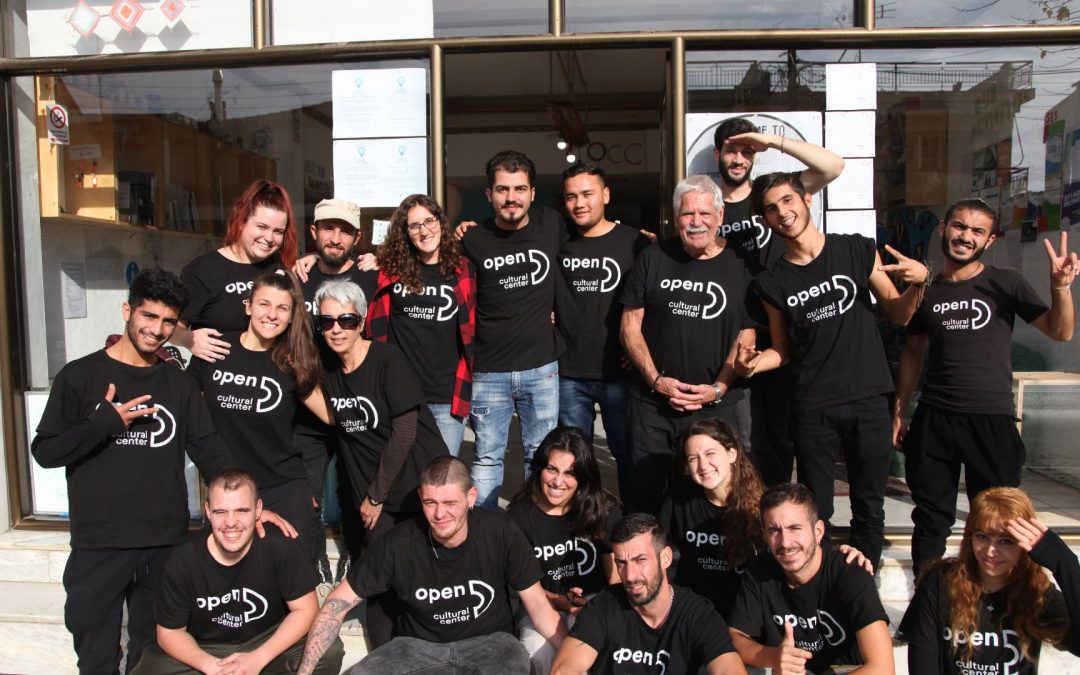
It’s due to all these considerations that we, at Open Cultural Center Greece, thought it would be valuable to join the DAPHNE-CHILD project. This is a 3 year programme, led by Eurochild and Terre des hommes, which empowers community-based organizations across 9 European countries: Bulgaria, Greece, Portugal, Ukraine, Spain, Serbia, Romania, Ireland and Hungary financed by the European Union. The programme aims to prevent and address violence against children and young people by supporting child-centred interventions.
Within this framework, we held 3 workshops at OCC connected to the topics like creative writing and theatre. The first activity was encouraging the Pirate’s group (teenagers aged 12-17) to write their own stories with illustrations. The other was based on creating short plays and acting different characters. During these activities the importance was put on the initiative of participants. The outcome of the task wasn’t imposed. Children were encouraged to suggest their own ideas and brainstorm together. This kind of activity is a good example that shows how education doesn’t have to be passive, limited to the retention of information but it has to be centered around creative exploration and discovering how each of us can give something to society based on their natural skills.
Within this framework, the DAPHNE-CHILD project offers a practical response to the educational exclusion faced by displaced children. Through community-based and child-centred activities, the project supports learning, self-expression, and social inclusion.
To conclude, ensuring access to education for displaced children is essential not only for their personal development, but also for building more inclusive and cohesive societies.

OCC Greece is taking part in the DAPHNE-CHILD project, with funding from Eurochild-Terre des Hommes. The project also receives funding from the European Union through the CERV programme.


Our volunteer programme is funded by the European Union through the European Solidarity Corps.

Stay up to date on news, opportunities, events and much more!
Insights, stories, and research from our projects and the communities we support